Sunday, January 23, 2011

All About Eve (1950)

 
Director: Joseph L. Mankiewicz
Cast: Bette Davis, Anne Baxter, George Sanders, Celeste Holm, Hugh Marlowe
Genre: Drama
Other Nominees: Born Yesterday, Father of the Bride, King Solomon’s Mines, Sunset Boulevard

While the title of the film is All About Eve it is less about the character of Eve and more about the impact that she has when she enters the life of the aging actress, Margo Channing. The greatest scene in All About Eve is delivered by Bette Davis as Margo when she pauses on her staircase, turns to her anxious guests, and mischievously declares, “Fasten your seatbelts, it's going to be a bumpy night!” Eve is the reason for this line being spoken. She is a catalyst that brings all of Margo’s fears and anxieties to the surface, and all of Margo’s petulant behavior comes right along with them.

The movie opens to a lavish awards ceremony where we meet the recipient of the night’s biggest award, the beautiful Eve Harrington. As Eve accepts the award that recognizes her as the brightest star in theatre she is greeted by rapturous applause. As the camera pans the room we focus in on two women in the audience who are neither clapping nor smiling. Instead these women brood darkly and watch the proceedings with bitter looks. As Eve is about to make her speech the narrator informs us that we shall now learn “all about Eve”.

From there we flashback one year and take another look at the two brooding women from the audience. Margo Channing is a talented actress sitting at the top of the theatre world. When we first meet her she has just finished a performance and is plastering her face with all manner of beauty treatments. It is clear that Margo struggles with the concept of her aging and with the inevitable effect it will soon have on her career. She is at this time a maturing woman playing twenty year old women on stage. The stress of her situation causes her to be prone to bouts of acting the teenage drama queen, a habit that has no doubt been encouraged by her position of fame.

Karen Richards, played by Celeste Holm, is the second of the brooding women, best friend to Margo, and wife to the playwright Lloyd Richards. It is Karen who introduces Margo to Eve, a timid and mousy girl who Karen has seen waiting outside the theatre night after night.

Eve is introduced as Margo’s biggest fan, a young girl who has stood in the rain to catch a glimpse of her day after day, and who has seen every single performance of Margo’s current play. When she does get a chance to explain her devotion to Margo her life story is touching and full of sadness. Those in the room instantly sympathize and like the impressionable young woman, so much so that Eve is almost instantly accepted by the group as a friend. It is only after a few months of this friendship has passed that we get to see behind the innocent little girl to the manipulating one out to seek her own fame and glory.

She quickly manipulates the men involved, most notably Margo’s lover, theatre director Bill Sampson, and Karen’s husband Lloyd. Before long, and against Margo’s wishes, Eve has become understudy to Margo, who has already figured out what motivates the young aspiring actress and attempted to put distance between them. I will leave the remainder of Eve’s machinations a mystery. As Eve’s reputation and status rises, Margo’s reputation begins to plummet and the better Eve is appreciated by everyone and the more innocent she appears, the more cruel, unkind, and full of bitterness Margo appears to her lover and friends. And honestly, it makes for great entertainment.

A special mention should be made to George Sanders as Addison DeWitt, a role that won him the Best Supporting Actor Oscar. Addison is our narrator and the only character in the film that appears immune to Eve’s Machiavellian ways, although it is clear that this immunity stems from his own slippery and conniving ways. Working as a theatre critic, and with an ever present sense of his own self importance, Addison DeWitt was one of the things I enjoyed most about this film. In one scene he arrives at a party with a blonde bombshell on his arm (an early role for the then new to the scene Marilyn Monroe), and immediately and effortlessly takes center stage. He is a socialite and a powerhouse in this theatre world and he knows it. His arrogance is great fun to watch.

I walked into All About Eve with little expectations and was stunned by how great of a movie it is. Nominated for a staggering 14 Oscars (a record that it held firm for 47 years until it was equaled by Titanic in 1997) this is a true classic and a film that has stood, and will stand, the tests of time.

Next Up: An American in Paris


Thursday, December 23, 2010

Top 3 -- Best Picture Oscar Winning Movies from the 1940s

With the exception of the movie that was always going to be ranked in first place, I found it very difficult to choose from what was a great decade of film. Here is my pick of the litter from the 1940s:

3rd place
1945 The Lost Weekend
Watching Don Bingham and the lives of his loved ones decimated by alcoholism is not exactly a fun filled experience. Alcoholism is a lonely and melancholy disease and this film about it is best watched when you are in a lonely and melancholy mood. It was far more brutal than I expected it to be, relentless in both its disturbing imagery and dialog. And with a truly outstanding performance from Ray Milland, this is a film that transcends time and may be as relevant to some today as it was to others over 60 years ago. 


2nd place
1940 Rebecca
What a fantastic film to start the decade of Best Picture Oscar Winners with! The fact remains that since seeing Rebecca I have felt somewhat obsessed or haunted by the film. It is no coincidence that obsession and the supernatural form two strong themes in Hitchcock’s masterpiece. There are some simple pleasures to be found in this psychological thriller/mystery: I enjoyed the fact that we never learned our heroines name throughout, I enjoyed how we never see the person who gives the film its name and yet she is very much a presence on screen, and I enjoyed how both Manderley house and its inhabitants intimidated me as much as they did our heroine. This is a film that has aged beautifully and I can imagine that the impressions I garnered are exactly the same as those taken away by film goers in the 1940’s. 


1st Place
1943 Casablanca
As fantastic as the other contenders were there is simply no beating what may be the greatest film ever made in my opinion. As a film Casablanca oozes as much confidence as Humphrey Bogart’s Rick does (that is before his cool demeanor is beaten upon by the return of his lost love). I spoke about The Lost Weekend transcending time and Rebecca aging beautifully but “as time goes by” I doubt there will be another film so ingrained in the fabric of our culture. How often have you found yourself quoting this film without realizing it? I know that I was doing so before I had ever seen the movie which is a fact that speaks for itself.


Wednesday, December 22, 2010

All The King's Men (1949)

Director: Robert Rossen
Cast: Broderick Crawford, John Ireland, Joanne Dru
Genre: Drama
Other Nominees: Battleground, The Heiress, A Letter to Three Wives, Twelve O’Clock High

Is it possible to corrupt even the most honest and decent of people? All the King’s Men takes a hard stance on the subject showing us a very decent and loving family man attain a position of power and then proceed to delve into corruption. The fall from grace is so drastic that this man passes beyond being just corrupt and by the end trends towards becoming truly evil. This is a hero to villain story that blatantly warns us of how frail the condition of being a good person is. While the message may come across as overzealous at times, there is no doubt that the movie sets out to scare you into believing that we are all corruptible and that nobody can be trusted.

At the beginning of the film we meet a witness to these events, Jack Burden (John Ireland). Jack is a newspaper columnist assigned to travel to a small southern town and investigate the political rumblings caused by a then small time, uneducated politician by the name of Willie Stark (Broderick Crawford). It seems that the corrupt officials of the town are making some questionable deals that focus on lining their own pockets rather than on the good of the people. When Jack asks his editor what is so special about Willie the editor replies in all seriousness that “they say he’s an honest man.”

Willie Stark’s first dalliance with politics occurs when he learns that the building of a local school has been done cheaply to profit those in charge and publically expresses his outrage. He is eventually arrested for his outspoken actions. Soon after the school tragically collapses, and as people look to point the finger of blame, Willie Stark finds himself promoted to a highly trusted member of the community and people begin to flock to him for help with problems. With the purest of intentions Willie puts himself through law school and opens up a firm to help take on these problems, and becomes a local champion against injustice and corruption.

In this early segment of the film great pains are given to show how good a person Willie is. We learn that he and his wife adopted their son from the neighboring farm when both of the boys’ parents passed away. In these early scenes we see a man with absolute adoration for his wife and son, a man completely content with his own family life while being equally focused on helping others reach the same level of contentment. In short Willie appears to be very much the “honest man” that he was described as.

However, born from the frustration that comes from losing his first political race we begin to see the seeds of the monster that Willie will become. Determined to win the next time he runs, Willie begins to loosen his moral sense. At first he makes statements like “the ends justify the means” as he begins to make the same bad deals that he fought so hard against. In his defense at this time there does appear to be a focus on the “ends” with aggressive plans for a new hospital and free health care for all and a focus on education for every child in the state. But as more and more lucrative deals are brokered and as roads, bridges, hospitals, and churches get built across the state, we begin to see the focus shift towards the gaining of wealth and power.  

It was interesting to watch Willie make no attempt to hide his increasingly immoral transgressions and begin preaching that “good cannot exist alone, that it can only be born from bad.” At this time we are dealing with a man who is habitually a part of bad dealings and whose sense of purpose has been lost. But like most villains who remain in power he has a way with words and a charming demeanor that allows him to delay any repercussions. 

In contrast to the earlier scene of familial bliss the Willie Stark we see in the latter half of the film lives away from his wife and son. He begins to have multiple affairs and the love that existed in those early scenes is utterly destroyed. When the family gathers for a portrait on the front porch of their rural home it is for purely political reasons and his wife’s earlier warm embraces are replaced by a cold and distant peck on the cheek. This demolition of the family is where we see just how much Willie Stark loses sight of himself as the movie progresses. Finally he reaches a state of pure corruption and his mantra changes to “man is conceived in sin and born in corruption”, a statement that both takes away any responsibility he has for his actions and frees him of any remorse.

We see this rise and fall of Willie Stark mostly through Jack Burden’s eyes, the reporter who was sent to investigate the honest politician. The admiration that Jack feels for Willie and for the work he is doing, coupled with the feeling that he himself is not accomplishing anything with his own life, causes Jack to gamble all of his worth, his career, his family and his friends on being associated with Willie. I use the word gamble because I get the sense that, out of a sort of desperation, Jack is betting it all on Willie coming good on his word. And when Willie begins to fall into corruption Jack cannot simply walk away nor can he even accept what is really happening, having invested so much. I struggled throughout the film to understand why Jack remained a supporter of Willie even when his methods turned extremely sinister. But it is quite clear that Jack is a man with little self worth and when a “sure bet” like Willie came along he jumped at the opportunity to be part of something important, and in the end he simply refuses to see when things turn horribly wrong.

I do find the aforementioned “man is conceived in sin and born in corruption” quote interesting for another reason. One of the big themes in this film is the idea that anyone can be corrupted no matter how pure they are. While Willie begins this story as nothing short of perfect, at the risk of sounding dramatic, his rallying speeches to the crowd or to “his militia” found at the end of the film remind me of footage of Adolf Hitler rallying his troops. Willie is full of pride, emotion and enthusiasm but his words hint at an aggression that will mow down innocent people before it and at a man that will do anything to get ahead.
Remember, it is not I who have won, but you. Your will is my strength, and your need is my justice, and I shall live in your right and your will. And if any man tries to stop me…  I'll break him. I'll break him with my bare hands, for I have the strength of many.
John Wayne was offered a role in this film and flatly turned it down, calling the film “unpatriotic”. I am assuming he was referring to the hostile representation of the political system shown in All the King’s Men. I was a little taken aback by how this film does nothing to dull the blows it takes at politics. The shocked remarks about there being such a thing as an honest politician scrape the surface of the political stance the film takes. It outright suggests that, not only is our society under a fragile sense of control, but that it inevitably breeds corruption. The movie gives no vision of the it being capable of producing anything but corruption and it was a little surprising to see such distaste in the American political system, especially at a time when America was emerging as the land of freedom.

Up Next: All About Eve


Wednesday, November 24, 2010

Laurence Olivier's Hamlet (1948)

Director: Laurence Olivier
Cast: Laurence Olivier, Jean Simmons, John Laurie
Genre: Drama
Other Nominees: Johnny Belinda, The Red Shoes, The Snake Pit, The Treasure of the Sierra Madre

Milton Shulman said in his review of the 1948 adaption of William Shakespeare’s Hamlet that to some it will be considered one of the greatest films ever made and to others it will disappoint deeply. After giving the film some thought I could understand how people could feel either way.

Before I get to my take on why it could be one of the greatest films ever made or why it could disappoint deeply, here is a brief summary of events: On the island of Elsinore we find the Danish prince Hamlet who is in a deep depression. His father had died only a few short months before and Hamlet is furious at his mother’s decision to remarry his uncle Claudius. The queen Gertrude and her new king seem content to forget Hamlet’s father and move on with their ruling of the state while poor Hamlet is clearly still in mourning and very upset. It is while in this frustrated and angry state of mind that Hamlet hears news of an apparition that is appearing nightly on the castle walls. Upon investigating he discovers the ghost of his father who reveals to him a shocking secret, one that demands swift action. The story centers on Hamlet’s response to this information and the disastrous events that play out. Since first appearing on stage the character of Hamlet has become the epitome of procrastination. This film is a study of the impact his inaction has on both his own mental state and on everyone around him.  

Why it could be one of the greatest films ever made…

For me there are two reasons why people would consider this adaption great. First, you have those who rightly recognize the performance from Laurence Olivier as Hamlet as being probably the best incarnation of the Danish prince to date. I have seen Mel Gibson and Kenneth Brannagh’s versions of Hamlet, but Olivier stands above time in terms of sheer passion. In the earlier parts of the film Olivier is brilliantly depressed as the suffering Hamlet and dispels for the audience any notion that this is simply a phase of sadness and grief, as Gertrude attempts to persuade him. Olivier shows us a deep anguish and the thoughts of suicide that are spoken are legitimately disturbing as a result of it. Olivier’s prince is not simply suffering with teenage melodrama but instead is deeply unsettled when he sighs “how weary, stale, flat and unprofitable, seem to me all the uses of this world!”

That same deep anguish is partly responsible for leading young Hamlet to fake madness, or to put on an “antic disposition”. One of the aspects of the play that I always enjoyed was the blurring of the lines between Hamlets pretending to be mad and being overwhelmed by an actual insanity as disasters unfold. By the second time the ghost of his murdered father appears to Hamlet the nature of his apparent instability is brought into serious question. Other characters were able to witness the first appearance of the wretched spirit wandering the battlements but this second appearance is seen by Hamlet only while his equally emotionally disturbed mother sees nothing. Here Olivier shifts his performance and the morose Hamlet is replaced with a frantic and uncontrollable Hamlet. Without the powerful performance of depression up front this frenetic performance would fall flat but Olivier shows us a very believable man whose sanity is on the verge of collapsing. Of the adaptions I’ve seen this version best displays the interpretation that we are witnessing a very real descent into madness and as the King Claudius puts it “madness in great ones should not unwatched go.”

Another aspect of the movie I considered to be brilliantly performed and directed was the voiceover work for some of Hamlets famous speeches.  For these soliloquies in stage productions, the actor playing Hamlet would oftentimes physically separate himself from the other characters and speak directly to the audience. This separation, sometimes as simple as a step away from the main body of action, was a deliberate means to inform the audience that what they were hearing were Hamlets thoughts and not his spoken word. For this film version I thought the mixing of voiceover and spoken word was a great way to let us into the tortured mind of the prince while making us aware that the other players were not hearing these words. It is a risky approach that could have ended up feeling very kitschy but Olivier brings a professionalism that makes it work well. It can be seen most effectively in his famous soliloquy that begins “to be or not to be that is the question…”  

The second reason why this film deserves massive praise is the cinematography used to bring Elsinore to the screen. In the first act we meet the murdered ghost of King Hamlet, lost among the battlements of his castle. The ghost appears as a rotting corpse in armor and looks fantastic on screen. It seems to tower over the terrified guards while being perpetually lost in a thick and swirling fog. When it finally speaks to Hamlet and tells of how it met its end the effect is satisfyingly horrific. I always loved the sheer drama found in the line “the serpent that did sting thy father’s life now wears his crown” and thoroughly enjoyed how it manifested itself here.

The sets are stunning with the interior of the castle being an absolute maze where all rooms are connected by twisting stairways and multiple exits. It appears that no matter which exit you take from one room you will inevitably end up where the action is next unfolding and the camera takes liberties in exploring the different paths available to you as it moves from scene to scene. Throughout the play characters are required to hide behind curtains and listen around corners and this castle is an endless source of secret hiding places. The whole structure brings to mind M.C Escher’s Relativity pictured below and the labyrinthine nature of the castle begins to act more and more as a reflection of Hamlets suffering psyche as the movie progresses.

 
Why it could deeply disappoint…

I can present two reasons that were cause for film can been criticized. Both have the common theme of deviating from the sacred to some source material.

When performed in its entirety Hamlet runs at about 4.5 hours and yet Olivier’s adaption comes in at just over 2.5 hours. This is the first and greatest cause for concern for some people. The argument is simple… a lot of people feel that Olivier simply cut too much from the play. The omissions from the original material are considered unnecessary by many with lines of dialog cut, altered and even allocated to different characters. The latter decisions to have different characters speak lines were mostly made as a result of the original character being cut from this version altogether. Most notably absent from this version are Rosencrantz and Guildenstern who are hired by the king to investigate Hamlets apparent madness. Also missing is the prince Fortinbras and an entire political subplot that shows us more insight into the kings character. These two cuts alone account for most of the missing action but throughout the film dialog and scenes are consistently shortened. In the end these decisions were bound to upset the purists but I have to admit that even I am a little concerned about the simplification of the story.

The film opens with an excerpt from a speech that is repeated later but then adds a simple statement that is not from the original text (you may have guessed as much when I said it was a simple statement). Olivier appears to sum up the play as being “a tragedy of a man who could not make up his mind”. Personally I think that if the film is to be considered offensive this is where the rankest offense lies and I would agree with the argument that the story is so much more layered than this simple summation. While I have always thought the movie is an extreme warning against procrastination I do think it is somewhat disrespectful to sum it up as being about just that. I can understand how even those who are not purists may be led to question the decisions to cut material after hearing this line at the beginning.

The second reason for criticism, and a reason why this film sits uncomfortably with some people, revolves around the relationship between mother and son, Gertrude and Hamlet. The theme of incest is repeated throughout the play but restricted mostly to Hamlets thoughts on his mother marrying his uncle. He speaks many times on the matter describing his uncle as “that incestuous, that adulterate beast” and describing Denmark as “a couch for luxury and damned incest.” Olivier however clearly interprets the relationship between Hamlet and his mother Gertrude as being incestuous in nature and that notion is played up in this adaptation with some intense physical encounters between the two. I can understand the argument for the interpretation being true but I can certainly understand people being upset, not so much at the interpretation itself, but at the inclusion of it in the film when its existence in the original play is one of those still hotly debated topics.   

Ultimately what you make of Laurence Olivier’s film all depends on what side of this argument you fall on…

You may feel that, with such a magnificent performance and a visually stunning experience, any deviations from or interpretations of the original material are justified. After all you could argue that the worst that can happen is that this film inspires people to investigate that original material. And you could further point out that there is no written rule that a movie adaptation need stick so closely to its source material, something that we have seen countless examples of since this films release.

"He would drown the stage with tears,
And cleave the general ear with horrid speech,
Make mad the guilty, and appal the free,
Confound the ignorant, and amaze, indeed,
The very faculties of eyes and ears."
Hamlet Scene 2 Act 2

On the other hand you may consider the works of William Shakespeare to be as close to perfection as they are going to get and in no need of altering. I can respect and tolerate the purists out there when you are dealing with these works. It may also be of concern to you when films attempt to make such works with a preconceived notion of what the audience will be capable of understanding. The “dumbing down” of material in film is also something we have seen countless examples of since this films release..

"This above all: to thine own self be true,
And it must follow, as the night the day,
Thou canst not then be false to any man."
Hamlet Scene 1 Act 3

Up Next: All the Kings Men

Thursday, November 4, 2010

Gentleman's Agreement (1947)

Director: Elia Kazan
Cast: Gregory Peck, Dorothy Mcguire, John Garfield, Anne Revere, Celeste Holm
Genre: Drama, Romance
Other Nominees: The Bishop’s Wife, Crossfire, Great Expectations, Miracle on 34th Street

It is not surprising to learn that the three Best Picture Oscar winning films post WWII all dealt with socially conscious themes. We had already seen alcoholism dealt with in The Lost Weekend in 1945 and veteran rehabilitation the subject in The Best Years of Our Lives in 1946. Completing this “trilogy” the 1947 winner turned its attention to racial bigotry and anti-Semitism in Gentleman’s Agreement. With the details of the Holocaust and all its atrocities emerging, I imagine it was hard not to find the subject of bigotry prevalent everywhere in life. In fact Gentleman’s Agreement shared the theme of tackling anti-Semitism with another nominee for Best Picture in 1947, Crossfire. With the evil of Nazism gone from the world perhaps it was only right to look around and attempt to purge any similarities to the regime at home and it appears that anti-Semitism was very much present in American culture. While it goes without saying that it never reached the lunatic levels of Nazism the same seeds of hatred existed and I understand that they demanded exposure.
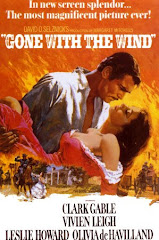
In Gentleman’s Agreement Gregory Peck plays Phillip Green who had recently moved his family, his son and his mother, to New York City. Upon meeting with the editor of the liberal magazine he writes for Phillip is tasked with exposing anti-Semitism in the city. Initially he struggles to come up with the “right angle” and feels that the facts and figures lack any real insight into how it must feel to be at the receiving end of any injustice he perceives. Then in a moment of clarity, Phillip decides to take on a Jewish persona to personally discover the actual attitudes of people in a town where very few people know him. From there the film proceeds to display example after example of an underlying bigotry and hatred that seems to be everywhere.

The examples come thick and fast. While experimenting with his new identity, Phillip finds that applications sent regarding open job positions are rejected when the name implies the person is Jewish, while the same application with a non-Jewish sounding name is accepted for an interview. He discovers that landlords similarly reject rental applications and strive to keep their buildings free of Jewish people. In one scene a doctor discourages seeing a Jewish specialist on the grounds that the patient will be cheated. He quickly makes excuses and leaves when Phillip discloses his “religion”. When Phillip attempts to make reservations at a swanky hotel his request is rejected as management strive to restrict customers to non-Jewish guests.

While these examples very successfully demonstrate the anti-Semitism in society, the more impactful demonstrations seen in the film are also the more subtle. There is enormous strain put on the blossoming relationship that Phil has with his editor’s daughter Kathy. While their relationship has few problems and they seem a perfect match for each other we see in Kathy an acceptance of the bigotry as being a part of life. When she first learns of the scheme she reacts poorly before attempting to save face:
Phil Green: I'm going to let everybody know I'm Jewish.
Kathy Lacey: Jewish? But you're not! Are you? Not that it would make any difference to me. But you said, "Let everybody know," as if you hadn't before and would now. So I just wondered. Not that it would make any difference to me… … Phil, you're annoyed.
Phil Green: No, I'm just thinking.
Kathy Lacey: Well, don't look serious about it. Surely you must know where I stand.
Phil Green: Oh, I do.
Kathy Lacey: You just caught me off-guard.
As the film progresses it becomes clearer to Phil that he had not simply caught Kathy off guard and that even bigger than the problem of outright discrimination was the subtle acceptance that “nice people” had for anti-Semitism. It is a lesson that Kathy learns before the films end but it also becomes the key theme of the film. Just as Phillip could not get his point of view across with pure facts and needed an emotional angle to tell the story the film too cannot get the problems of anti-Semitism across by simply giving examples and needed to explore the emotional impact the divide had on relationships. This demonstration of bigotry being accepted and of the impact it has on Phillip’s relationship with Kathy is where the true power of the film lies.
Phil Green: I've come to see lots of nice people who hate it and deplore it and protest their own innocence, then help it along and wonder why it grows. People who would never beat up a Jew! People who think anti-Semitism is far away in some dark place with low-class morons. That's the biggest discovery I've made. The good people! The nice people!
A second relationship impact is shown between Phil and his young son Tommy. When Tommy learns that they are playing a game of pretending to be Jewish he begins to ask questions of breakfast one morning. I really enjoyed this simple scene where Phil struggles to explain bigotry and why it exists to an innocent child. It reminded me of the sad fact that one day I will have to explain similar things to my own child.
Tommy Green: What's anti-Semitism?
Phil Green: Well, uh, that's when some people don't like other people just because they're Jews.
Tommy Green: Why not? Are Jews bad?
Phil Green: Well, some are and some aren't, just like with everyone else.
Tommy Green: What are Jews, anyway?
Phil Green: Well, uh, it's like this. Remember last week when you asked me about that big church, and I told you there are all different kinds of churches? Well, the people who go to that particular church are called Catholics, and there are people who go to different churches and they're called Protestants, and there are people who go to different churches and they're called Jews, only they call their churches temples or synagogues.
Tommy Green: Why don't some people like them?
Phil Green: Well, I can't really explain it, Tommy.
Tommy plays along with the game of pretending but the pain that Phil feels when his child begins to be bullied is more powerful than any of the examples mentioned earlier. What at first is just a game to Tommy becomes much worse when the local kids begin to ostracize him. After being bullied one afternoon Tommy arrives home with tears in his eyes. A Jewish friend of Phillips tells him that now that his children have felt the sting of bigotry, he has a complete understanding of what it feels like to be Jewish. This friend goes on to describe comforting his own child who does not understand why he cannot play with other kids or why they are rejected from attending camp.

That moment where Tommy arrives home also becomes the pivotal moment between Phillip and Kathy. Upon seeing him upset Kathy embraces the crying Tommy and soothingly tells him that “it’s not true. You're no more Jewish than I am. It's just some horrible mistake.” This proves to be the final straw for Phillip who is enraged that rather than explaining to his son that the bullying of Jews is unjust and cruel, she chose to comfort him with the knowledge that he was above being Jewish. Not only does Phillip realize the jeopardy that he has placed his son in, and the injustice of that jeopardy, but this moment also solidifies that idea that good people are propagating anti-Semitism as much as any bully or bigot is. This indifference to injustice becomes the films key message.

As I watched Gentleman’s Agreement I could not help but think about Gregory Peck as Atticus Finch in To Kill a Mockingbird, a character who shares a lot in common with Phillip Green. Both are fathers attempting to raise children who see beyond the labels placed on people by the color of their skin or by their religion. Both fathers are forced to explain bigotry to children whose innocence cannot comprehend the complicated reasons of why such hatred manifests itself between different people. Both fathers attempt to stand up against society and show their children that they can behave differently than those around them. In particular I thought about To Kill a Mockingbird and the continued struggle to treat all people equally when I listened to the words of Phillips mother as she looked to the future:
I suddenly want to live to be very old… Very. I want to be around to see what happens. The world is stirring in very strange ways. Maybe this is the century for it. Maybe that's why it's so troubled. Other centuries had their driving forces. What will ours have been when men look back? Maybe it won't be the American century after all... or the Russian century or the atomic century. Wouldn't it be wonderful... if it turned out to be everybody's century... when people all over the world - free people - found a way to live together? I'd like to be around to see some of that... even the beginning. I may stick around for quite a while.
It has been over 50 years since Mrs. Green first said those words to her son and although we have not reached the utopian vision she had of all people finding a way to live together I’d like to think that we are still moving in the right direction. That however is a debate for another day.


Up Next: Hamlet